

Newborn Hospital Bag Clothing Checklist
Newborn Clothing Checklist: What to Pack in Your Hospital Bag
Newborn baby essentials come down to a short list: baby grows, vests, hats, bibs, a blanket and one going-home outfit. That covers the hospital bag and the first few weeks at home. Everything after that you can add once your baby is here and you can see what they get through.
The first few weeks come at you fast, and the last thing you need is a changing bag missing the one thing you are reaching for at 3am. Luca and Rosa's newborn baby essentials live together here: the grows, vests, hats, bibs and blankets that carry a new baby through those early weeks, all cut from the same organic cotton, all made to match. No trawling six different shops, no squinting at whether the whites go together. One range, built for the part of new parenthood nobody quite feels ready for.
What Your Baby Needs First
Pared back, a newborn's wardrobe is short. Shorter than the lists suggest. Here is what actually earns its place in those first weeks, and what each piece is really there to do.
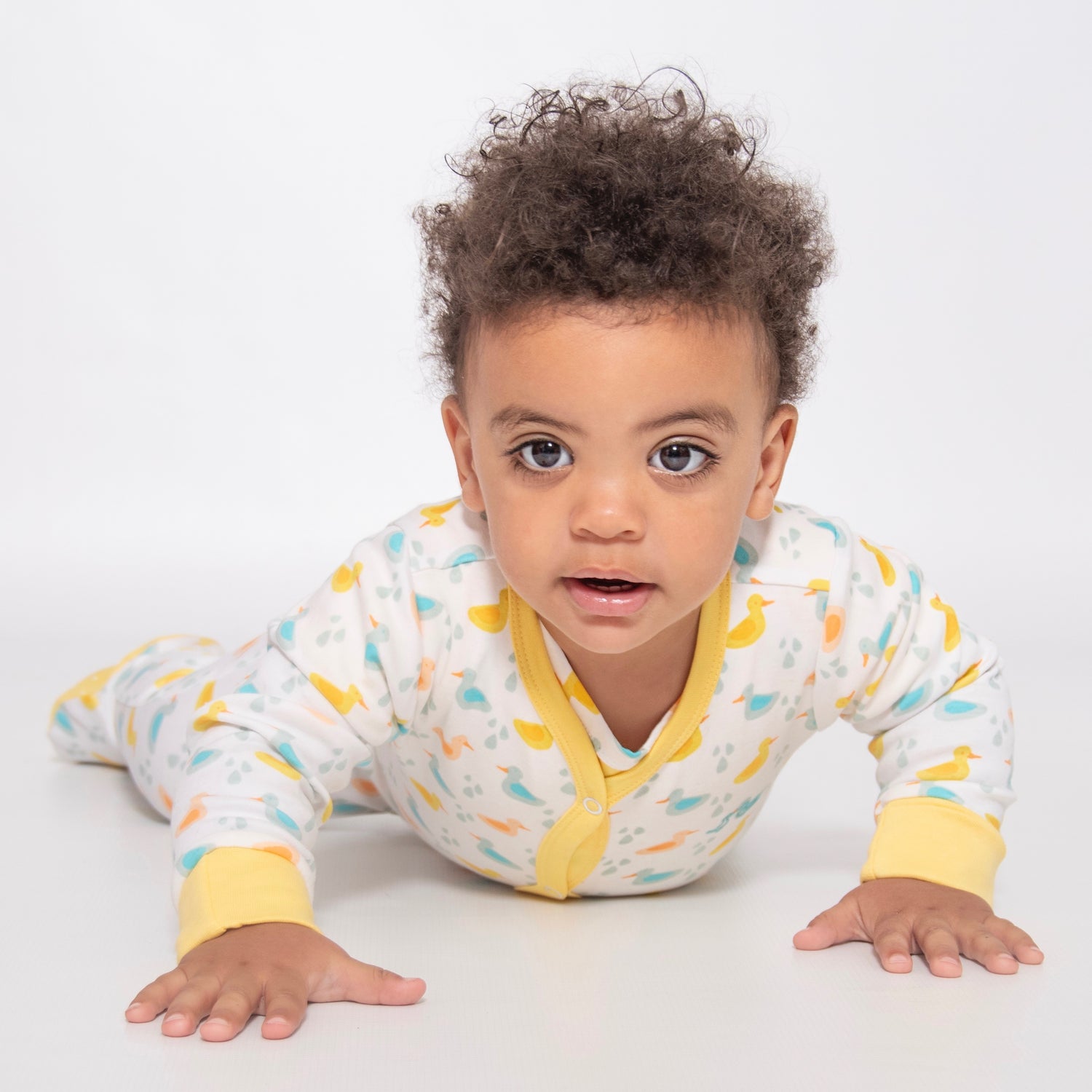
Newborn baby grows do the heavy lifting. Day, night, and most of the hours in between, a baby more or less lives in them. Full-length poppers down the front and both legs are the detail that matters, because a nappy change at 3am is not the moment to be posting a sleepy baby through a neck hole.
Newborn baby vests sit underneath. On a warm day a vest on its own is plenty; when it cools, it becomes the base layer under a grow. Short-sleeve bodysuits are the ones most parents reach for first, and they are the piece you will get through fastest.
A couple of soft newborn baby hats matter more than they look. Newborns lose heat quickly through their heads in the first days, so having a hat ready for the trip home and the cooler mornings is worth it. Bibs come into their own sooner than anyone warns you, too. The dribbling and the milky sick-ups start early, and a bib saves changing a whole outfit every time.
A blanket, or two, rounds it off. Moses basket, pram, car seat, or simply an extra layer to fold over when the weather turns. Ours double as a light swaddle in the early weeks, which is one fewer thing to buy separately.
How the Pieces Work Together
The point of buying your essentials as a set, rather than piece by piece, is that they layer. A vest under a grow, a hat on top, a blanket over the lot, and you can dress up or down for the temperature without a wardrobe full of specialist bits. Newborns cannot regulate their own temperature well, so simple, adjustable layers beat one heavy outfit every time. Because it is all the same organic cotton, nothing bunches or scratches where the layers meet, which is half the battle with a baby who has no way of telling you what is bothering them.
Everything From One Range, So It All Matches
Here is the quiet advantage of building your essentials from a single range. A vest does not clash with a grow. A hat sits right with the blanket. Pieces get released in the same prints, so a newborn baby set comes together without much thought, right down to what is folded in the changing bag.
It is not only about the photos, lovely as those first ones are. It is that you stop making tiny decisions. Grab a grow, grab the matching vest, done. When you are running on broken sleep, not having to think is a feature you did not know you needed. Buy a wardrobe from five different places and you spend the newborn weeks quietly refereeing which greys go with which creams. Buy it from one, and that job disappears.
First Size, Newborn or Tiny Baby
Sizing ahead of a birth is mostly educated guesswork. Scan weights have a habit of being wrong, sometimes by a pound or more, so a wardrobe built entirely around one size is a gamble.
| Size | Rough age | Approx weight | Best for |
|---|---|---|---|
| Tiny baby / first size | Prem to newborn | Up to ~7.5 lb | Early or smaller arrivals |
| Newborn | 0 to 1 month | ~7.5 to 10 lb | Most babies at birth |
| 0-3 months | 1 to 3 months | ~10 to 14 lb | Bigger babies and the weeks after |
Most babies land in newborn size at birth. First size baby grows and tiny baby clothes are cut smaller, made for early arrivals or babies who turn up on the lighter side. A bigger baby can skip newborn almost entirely and go straight into 0-3 months. The sensible move is a small spread across sizes, so whoever turns up has something that fits from day one.
One word of caution: do not overbuy the smallest size. Newborns can outgrow it in a fortnight, so a few first size pieces alongside a solid core of newborn and 0-3 months usually works out better than a drawer full of tiny things worn twice.
What to Buy Before the Birth, and What Can Wait
You do not need the full range on day one. Before the birth, a small capsule is plenty: a handful of grows and vests, a couple of hats, some bibs, a blanket, and one going-home outfit set aside. That covers the hospital bag and the first days at home, and not much more is worth the outlay before you have met your baby.
Everything else can wait. Some babies are sicky and burn through vests; some are settled and barely trouble a bib. You will know which you have within a week, and the range is here to top up from when you do. Buying to what is actually in front of you beats buying to a checklist you found at 2am while pregnant and anxious. It is kinder on the budget and you end up with far less that never gets worn.
Well Made, Made to Pass On
There is a reason parents hang on to these. Organic cotton that has been made properly holds its shape and its softness wash after wash, rather than going thin and bobbly after a month in the machine. That is what makes the extra spend worth it. A first size baby grow that is still good enough to pass to a friend, hand down to a second baby, or sell on once you are done with it holds a bit of its value in a way fast, cheap clothing simply does not. You can read the full story on the fabric over on our organic cotton baby clothing page.
A Newborn Gift That Actually Gets Used
Buying for someone else's new arrival? A newborn baby gift from the essentials range is hard to get wrong, because it is all things a new parent genuinely needs rather than another soft toy for the pile. Gift wrapping comes as standard, tissue paper and a branded box, with a handwritten note added on request. A matching grow, vest and hat makes a baby shower gift that arrives ready to hand over.
Where to Begin
Start with the grows and vests, add a hat and a blanket, and you have covered the first few weeks. If you are packing a hospital bag rather than stocking the nursery, our newborn clothing checklist runs through exactly what to take and how many of each.
FAQs
What clothes does a newborn actually need?
Not as much as the lists suggest. A handful of grows and vests, a couple of hats, some bibs and a blanket will see you through the first weeks. You build from there once you know what your baby gets through in a day.
What size should I buy before the baby arrives?
A mix is safest. Most babies fit newborn size at birth, but keep a first size or tiny baby set back in case they come early or small, and one set of 0-3 months for a bigger arrival. Scan weight estimates are not worth betting the whole wardrobe on.
What's the difference between first size and newborn?
First size and tiny baby clothing are cut smaller than standard newborn, made for premature and lighter babies. Newborn is the size most full-term babies start in. If you are unsure which way your baby will go, a set of each covers you.
Do the newborn pieces come as matching sets?
Often, yes. Grows, vests, hats and blankets tend to share prints, so putting together a coordinated newborn baby set, or a gift, is straightforward rather than a hunt for pieces that happen to go together.
Are the essentials organic cotton?
Every piece is. The whole newborn range is made from the same GOTS-certified organic cotton the brand is built on. Our organic cotton baby clothing page goes into what that certification means in practice.


